On 9/6/2011 1:14 PM, Bill Williams wrote:
Gerry, David, to answer the original question; the gears in a printer
are probably Delrin or something similar in properties. Since a gear
needs certain material behavior characteristics that are very like those
of a thrust washer you should be able to use them. That is a good
idea BTW! Bill in Boulder
__._,_._
I used some 5/8" black round Delrin, also known as Acetal, as per explained
here and sold
here. .
Here is an easily made black round acetal thrust washer on my mini-mill, positioned perhaps 1/4" in front of the shoulder of the leadscrew that it normally slides up against in this picture.:
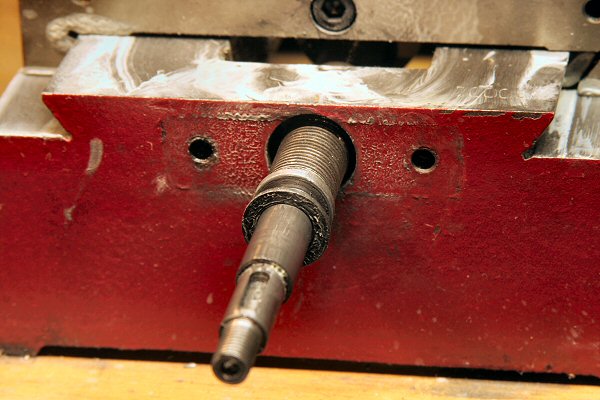
Without the thrust washer in place, the shoulder seen just behind the black washer above wears directly on the face of this piece, labled as a "
Retainer, Y-Axis Screw" on LMS:

I shamelessly "stole" this idea from David Clark and posted about it over on the
Mini-Mills group, complete with links to his original posts back on this group, where he was offering free thrust washers at that time to anyone who wanted them while supplies lasted. Free. Did I mention free? Free is good. :-)
In my case I'd impatiently forced the machine to go a bit farther on the Y axis than it should have gone in order to complete something I was working on. The y-axis leadscrew shown above plowed into the "Y-Axis Retainer" with some excessive force, which then made for some rough turning afterwards. Smoothing them out (that shoulder on the leadscrew shaft and the retainer) with some wet/dry sandpaper, and then adding the thrust washer made things operate much better and smoother than it did before the problem ever occurred!
I highly recommend that all manual X2 owners utilize David Clark's thrust washer idea as per shown above. Cuts down on slack and makes the y-axis turn
much smoother than before. Simple and quick to do. Mount and center a short length of delrin/acetal round bar in the mini-lathe (or vertically mount a short length of same in the mill vise and carefully locate the center), center drill a center hole sized to just fit over the shaft, and then part or otherwise cut off a ~ washer's thickness ~ from the end. Clean it up and mount it as shown way up above. Reassemble mill hand wheel and such. Done. Smooth hand wheeling ahead! :-)
Cheers,
John Z.
__._,_.___